
Explore Gokyo Lake:
A Serene Trek in the Heart of Everest
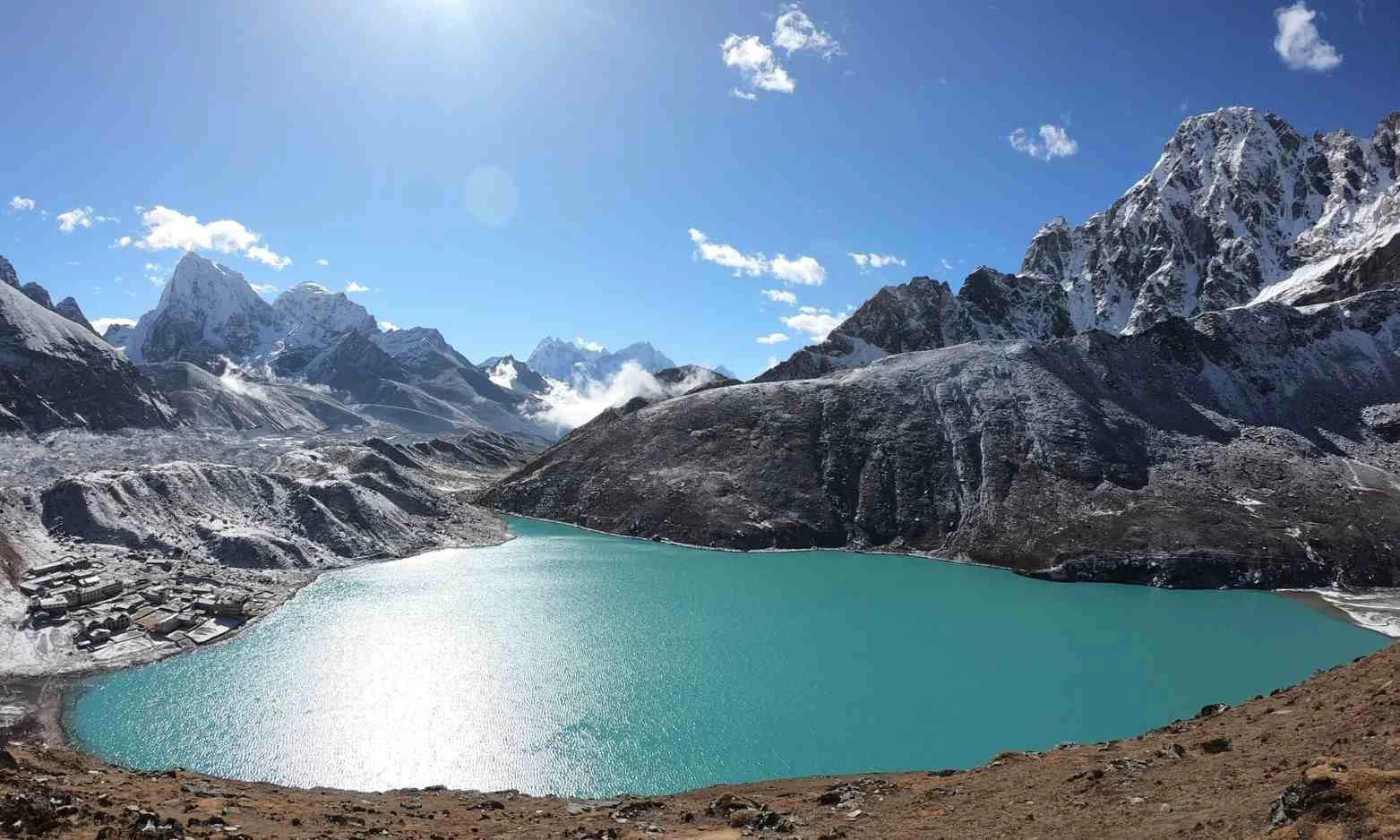
Overview of the trek to Gokyo Lake
Discover Gokyo Lake, a hidden gem in Nepal's Khumbu region. This pristine lake is part of the Gokyo Lakes system, nestled in Sagarmatha National Park. Interestingly, the name Gokyo comes from the nearby Gokyo Ri, meaning Gokyo Peak in the local Sherpa language. Moreover, the area boasts 19 stunning glacier-fed lakes.
Our trek will first take you to Gokyo Cho, the largest and most iconic lake in the region. Immerse yourself in the breathtaking landscapes surrounding this hidden gem. Additionally, embark on a day hike to explore the vast Ngozumba Glacier. Witness the grandeur of mountains like Cholatse and the famous Cho Oyu.
Furthermore, climbing Gokyo Ri rewards you with an unforgettable sunrise view. Enjoy the vistas from Renjo La pass. From there, spot several 8,000-meter peaks, including Everest, Makalu, Kanchenjunga, and Lhotse. As you continue, the journey takes you through the secluded Nangpa Valley. Visit the village of Thame, known for its impressive monastery. Finally, conclude your Gokyo Lake trek in Lukla.
In conclusion, Gokyo Lake combines natural beauty, cultural immersion, and physical challenge. Therefore, it showcases the best of Everest's hidden treasures, providing an experience that goes beyond the typical tourist trail.
How long is the Gokyo Lake trek? Explaining the itinerary.
The Gokyo Lake trek is a 14-day adventure that takes you off the beaten path in the Everest region. Your journey begins with a flight to Lukla, and from there, you'll trek to Namche Bazaar, the Sherpa capital. After acclimatising, you'll leave the popular Everest route behind and head towards the tranquil Gokyo Valley.
As you trek through Dole and Machermo, you'll catch your first glimpse of the majestic Ama Dablam. However, the true highlight is Gokyo Lake itself, a pristine high-altitude gem. Additionally, a day hike to the Fifth Lake offers stunning views of Cho Oyu and helps with acclimatisation.
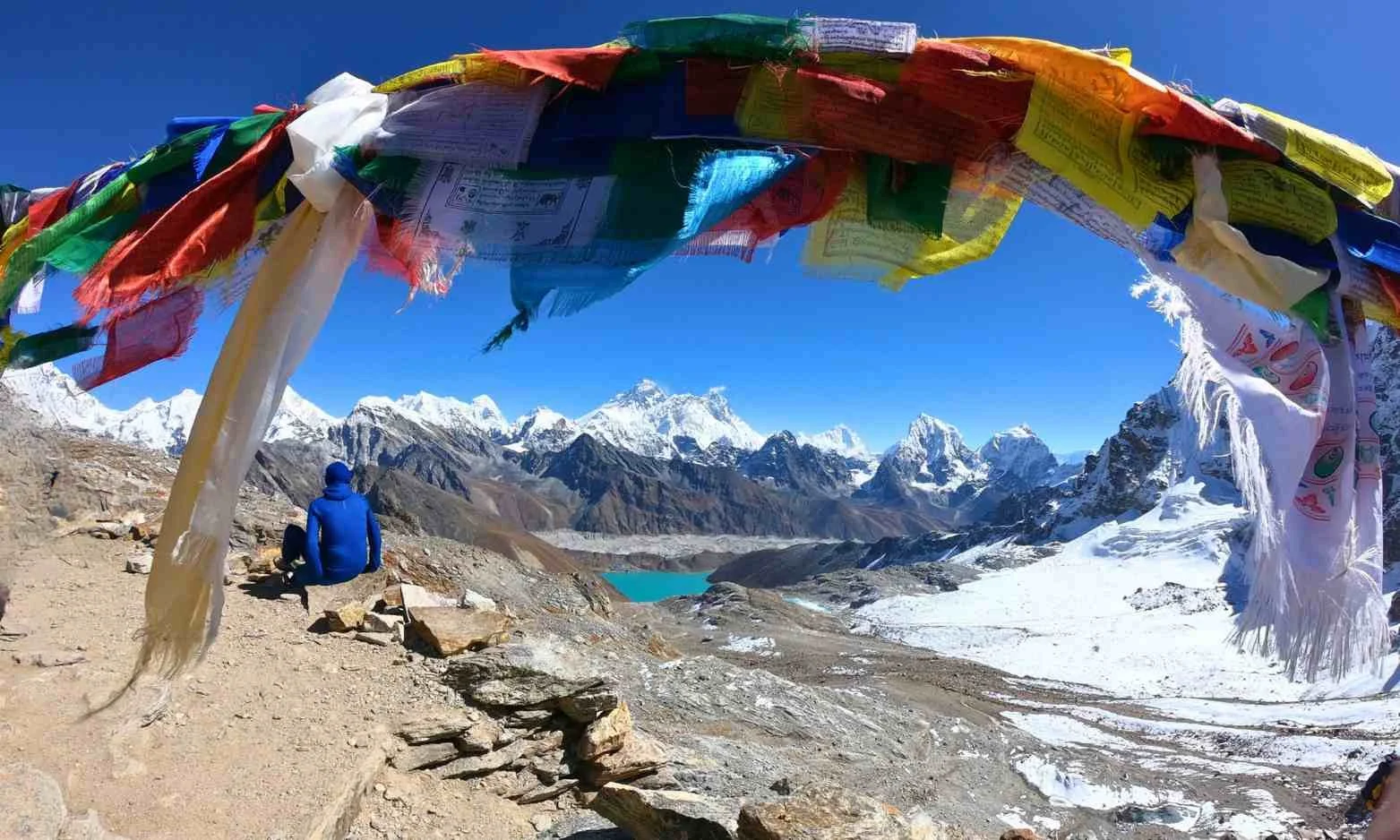
The trek reaches its climax with a sunrise climb up Gokyo Ri, where you'll witness the Himalayan giants in all their glory. Yet, the most awe-inspiring moment comes when you cross the Renjo La pass, as the panorama here showcases the immense scale and beauty of the Himalayas.
As you descend to Lungden and Thame, you'll have the opportunity to immerse yourself in authentic Sherpa culture, which includes a visit to the historic Thame Monastery. Finally, you'll loop back to Lukla via Namche Bazaar, thus completing this unique circuit trek.
Gokyo Lake: A detailed day by day itinerary:
-
Your journey begins as you land at Kathmandu International Airport. Upon arrival, our team will warmly welcome you. Subsequently, we'll escort you through the vibrant streets of Kathmandu to your hotel in Thamel.
-
Explore Kathmandu's vibrant culture today. Moreover, take this opportunity to finalise your gear preparations for the upcoming adventure.
-
An early start awaits as we drive to Ramechap airport. Subsequently, our flight to Lukla marks the beginning of our adventure. Upon arrival, we'll embark on a gentle hike to Phakding.
-
We enter Sagarmatha National Park after permit verification. Afterward, our journey continues with a gradual ascent to Namche Bazaar, the renowned Sherpa capital. This vibrant hub, bustling with fellow trekkers, will be our home for two nights as we acclimatise and explore.
-
Our day hike leads to the Everest View Hotel. In addition, this day serves dual purposes: acclimatisation and breathtaking vistas. Relax on the terrace with a hot drink, absorbing the majesty of Everest.
-
We diverge from the famed Everest Base Camp trail today. Subsequently, our journey leads us into the valley of the Dudh Kosi River. This path ends today at a welcoming teahouse in Dole.
-
We trek along the landscape's undulations towards Machermo. As we do so, the valley's history as a yak settlement is still palpable. Now, it welcomes trekkers with a selection of teahouses, blending tradition with modern hospitality.
-
Today's trek leads us out of the valley towards Gokyo Lake. As a result, the trail offers increasingly spectacular views of the surrounding mountains. After crossing the roaring Dudh Kosi river on a wooden bridge, we encounter a series of small lakes, frequently inhabited by rare Ruddy ducks. Finally, our path concludes along the shore of Gokyo Lake, with Gokyo Ri looming in the background and a welcoming teahouse ahead.
-
A day hike for acclimatisation begins and takes us alongside the impressive Ngozumba glacier. During this hike, the Khumbu's mountains dominate the horizon while Cho Oyu looms far away, completing this awe-inspiring Himalayan panorama.
-
Rising early, we climb Gokyo Ri, hoping to catch the sunrise during our ascent or at the summit. The breathtaking views are worth the effort. After that, we savour a warm tea and descend to our teahouse by Gokyo Lake.
-
Pre-dawn departure marks the start of a challenging climb to Renjo La. The ascent unveils breathtaking vistas, with Kanchenjunga visible midway. At the pass, panoramic views of Everest, Makalu, and Lhotse explain its popularity among local guides. Subsequently, the descent features a picnic lunch amidst stunning scenery. Ultimately, the day concludes at a teahouse, leaving us simultaneously exhausted and invigorated.
-
As a contrast to yesterday's challenging trek, a gentle descent to Thame awaits. The path winds through Nangpa Valley, an authentic region. Traditional yak houses and settlements dot the landscape, offering glimpses into local life.
-
Today, we immerse ourselves in the local Sherpa culture. After a leisurely breakfast, we embark on an easy hike to the renowned Thame Monastery. Along the way, we'll be treated to breathtaking mountain vistas. For those seeking a longer adventure, we can continue up the valley towards Thangbo Kharka, though the teahouse there is often closed.
-
The day brings a gentle descent to Namche Bazaar, passing through local villages and tracing the landscape's contours. A lunch break at a local teahouse provides a chance to rest. Finally, Namche Bazaar's lively ambiance and distinctive mountain town appeal await once again.
-
Our trek concludes as we retrace our path back to Lukla. As a result, our adventure nears its end.
-
Your journey concludes with a flight to Ramechap Airport. From there, a drive returns you to Kathmandu. In the capital, you can reflect on and celebrate your remarkable climbing achievement.
-
Delve into Kathmandu's authentic culture. Moreover, visit a cultural site or wander the streets for genuine experiences. Shop for authentic Nepali crafts in Kathmandu's local markets.
-
Your Nepal trip ends with a warm goodbye and a comfortable transfer from your hotel to Kathmandu International Airport.
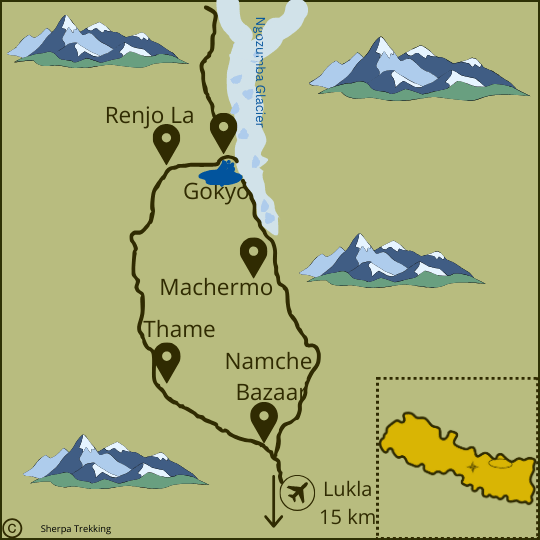
The Gokyo Lakes Trek Map
Our Gokyo Lakes Trek map provides an authentic overview of your journey through the Everest region. It highlights key landmarks like Gokyo Lake, Gokyo Ri, and Renjo La pass, immersing you in the stunning landscapes of the Gokyo Valley.
While this map offers a general understanding of the trek, it's not suitable for navigation. For a more detailed and precise map, we recommend purchasing a topographical map in Kathmandu before your trek. This ensures you have the necessary tools to navigate this hidden valley of the Khumbu.
How difficult is the Gokyo Lakes trek?
The trail to Gokyo Lake is not difficult, but the altitude can be a challenge. However, at 4,800 meters, Gokyo Lake is a peaceful yet demanding destination. In fact, the trek reaches over 5,000 meters, with Gokyo Ri and Renjo La pass as the highest points.
Therefore, we prioritise your safety and comfort by planning rest days. This helps you acclimatise and reduces the risk of altitude sickness. As a result, you can fully experience the region's stunning landscapes and authentic culture.
When is the best time to trek to Gokyo Lake?
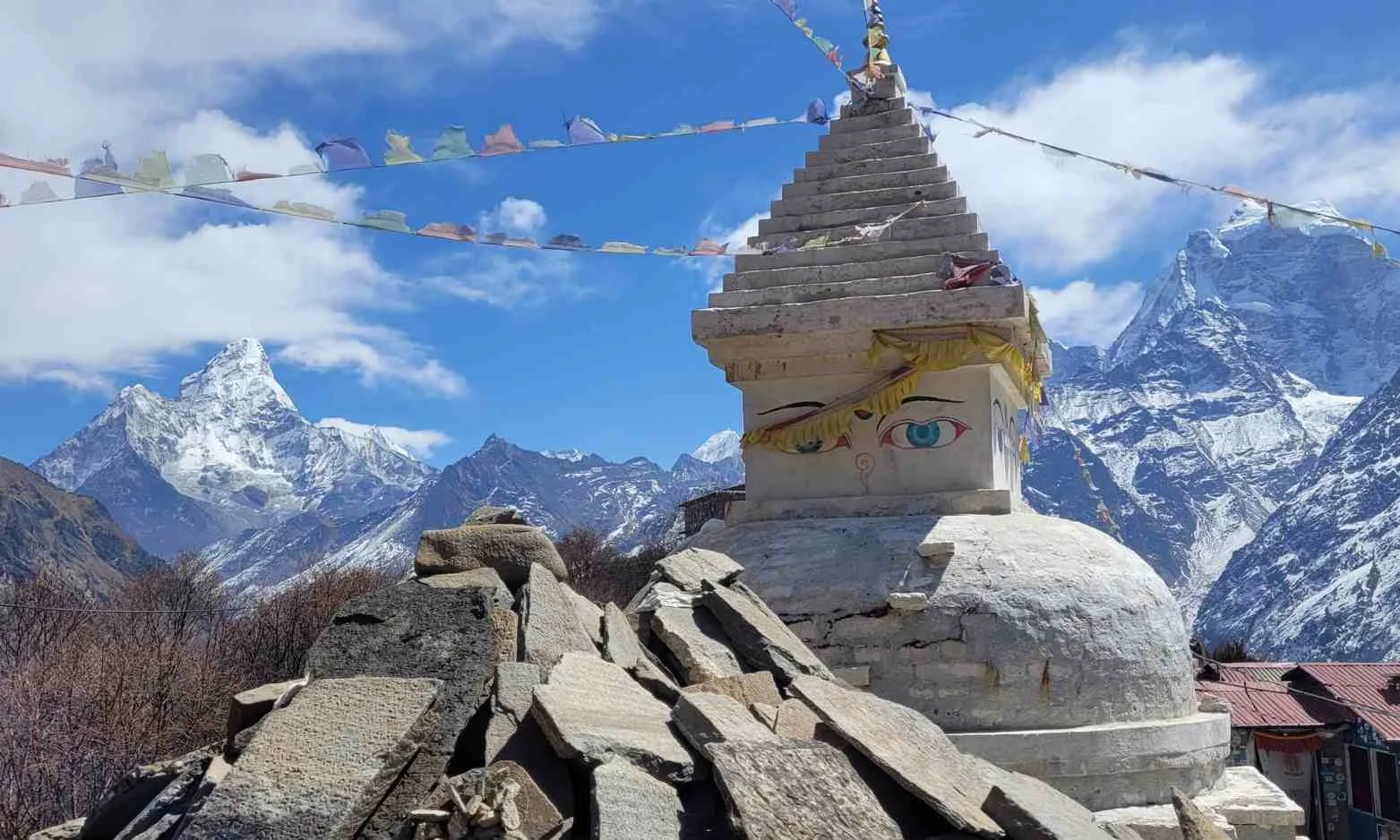
The best time to visit Gokyo Lake is during spring (March-May) and autumn (September-November). These seasons offer clear skies and moderate temperatures, perfect for trekking.
You'll experience the Khumbu region at its most vibrant, with stunning mountain views. The good weather will make your Himalayan journey even more remarkable.
Summer brings monsoons to Nepal, which limits visibility and make trekking harder. It's best to avoid this season.
Winter has clearer skies and fewer crowds, but temperatures drop a lot. If you go in winter, pack extra warm clothes.
How much does it cost to go to Gokyo Lake?
The cost of this adventure is dynamic and reflective of trekking seasons, group sizes, and additional logistics. A starting price is provided, with fluctuations expected based on the specific demands of the trekking period.
-
Airport Transfers: Seamless transportation between Kathmandu International Airport and your hotel.
Kathmandu-Lukla Flights: Round-trip flights with airport transfers, connecting you to the trek starting point.
Kathmandu Accommodation: Your stay includes two nights in a Thamel area hotel before the trek and two nights after, with breakfast provided.
Teahouse Lodging: Thirteen nights in local teahouses during the trek, immersing you in authentic Nepali hospitality.
Trek Meals: Full board (breakfast, lunch, and dinner) throughout the trek, fuelling your adventure.
Professional Guide: Expert guidance from a licensed, English-speaking mountain guide for the entire trek.
Porter Service: One porter for every two trekkers, carrying up to 10 kg per person.
Staff Support: Comprehensive care for our guide and porter team, ensuring their well-being throughout the journey.
Trekking Gear: Complimentary use of a waterproof luggage bag for the duration of your trek.
Permits and Fees: Entry fees for Sagarmatha National Park, TREK card, and all applicable local taxes.
Local Support: Dedicated assistance from our Kathmandu office throughout your Himalayan experience. -
International Flights: Airfare to and from Nepal is the responsibility of the trekker.
Nepal Visa: Visa on arrival must be obtained by the trekker upon entering Nepal.
Kathmandu Meals: Lunches and dinners in Kathmandu are not covered in the package.
Personal Trek Expenses: Costs for beverages, snacks, hot showers, internet, laundry, and battery charging during the trek.
Travel Insurance: Personal travel insurance is essential and not included in the package.
Emergency Rescue: Charges for any rescue operations during the trek are not covered.
Unforeseen Costs: Additional expenses due to itinerary changes, delays, or natural events are not included.
Gratuities: Tips for your guide and porter are at your discretion and not included in the package.
Gokyo Lake features pristine blue waters in Nepal's breathtaking Khumbu area. As you trek through Sagarmatha National Park, you will truly understand these mountains' spirit. Reaching Gokyo Ri and crossing Renjo La pass reveals unique views that most travellers don't see.
These adventures test your strength, and as a result, they reward you with a deep sense of accomplishment. Our thoughtfully planned journey combines natural beauty with genuine cultural connection and a significant physical challenge. Therefore, we lead you away from typical tourist paths to discover Nepal's hidden gems directly.

Frequently Asked Questions
-
Gokyo Lake is a lagoonal lake in the Khumbu region. It belongs to a network of 19 lakes, all named after the majestic Gokyo Ri peak that stands tall in the vicinity.
-
Gokyo Lake is situated in the Everest region within in Sagarmatha National Park. It neighbours the famous Gokyo Ri.
-
The altitude of Gokyo Lake is 4,800 meters / 15,748 feet
-
Gokyo Ri Peak stands tall at an altitude of 5483 meters / 17,988 feet.
-
The climb up to Gokyo Ri peak takes around three hours. However, the weather conditions can affect the duration of the ascent.
-
No, you can not see Mount Everest from Gokyo Lake. However, Gokyo Ri, located near the teahouses along the shore, offers a clear view of Everest from its peak.
-
Renjo La sits at an altitude of 5,344 meters / 17,532 feet.
-
Yes, you can visit Everest Base Camp via Gokyo Lake, or vice versa.
-
To trek to Gokyo Lake, you need specific permits. These include a Sagarmatha National Park Permit and an Everest TREK card. Our experienced team at Sherpa Trekking takes care of the paperwork.
-
Most trek nights are spent in local teahouses, which offer basic rooms and dining options. Specifically, these mountain huts provide simple, unheated bedrooms with shared bathrooms, though some offer private bathroom facilities.
The dining room is usually heated after sunset. Meals feature rice, pasta, and potatoes, with limited fresh vegetables and meat.
-
High elevation trekking demands strategic layering. Essential gear includes warm layers, waterproof outerwear, and sturdy boots. A sleeping bag rated to -20°C or lower is crucial. In addition, don't forget sunglasses, sunscreen, a hat, gloves, and first-aid supplies.
We provide a comprehensive packing list for download.
For your convenience, we offer rental services for warm down jackets and sleeping bags suitable for extreme cold. These items are tested for Everest's harsh winter conditions, ensuring your comfort on the trail.
-
During the Gokyo Lakes Trek, you reach 5000 meters twice. Therefore, the trek requires a strong physical condition and mental resilience.
Begin your preparation months in advance, focusing on endurance and strength. To this end, incorporate regular running and strength training into your routine. This physical and mental preparation is key to fully embracing the challenge.
-
Preparing for the Gokyo Lakes Trek requires excellent physical condition and proper acclimatisation. Despite careful planning, altitude sickness can still occur. Stay hydrated and avoid alcohol during your journey.
Should symptoms arise, stop ascending immediately. Acetazolamide may aid in acclimatising, but if symptoms persist or worsen, descending is crucial.
Our experienced guides are here to support you throughout this tough adventure. Always communicate any discomfort, no matter how minor it may seem. Your safety is our top priority as we explore Nepal's hidden Gokyo Lake together.
-
The Everest region offers extensive mobile coverage, but expect occasional disconnected days. Therefore, for a reliable connection, opt for NTC or NCELL SIM cards. We recommend purchasing these in Kathmandu before embarking on your journey.
Wifi access is available through Everest Link network cards, purchasable at teahouses for 24-hour use. However, be prepared for intermittent electricity outages, which also affect wifi availability.
-
For our trek to Gokyo Lake, we are committed to preserving the breathtaking beauty of the Khumbu region. Our dedication extends to supporting the "Carry Me Back" initiative. This vital program, led by Sagarmatha Next and the SPCC, focuses on sustainable waste management.
We encourage you to participate by using the provided "Carry Me Back" bags to transport back any non-biodegradable waste. This collaborative system ensures that waste is properly removed from the Sagarmatha National Park for recycling. Ultimately, helping us all to protect this fragile and incredible landscape for future generations.