
Climb Mera Peak: Nepal's Highest Trekking Peak
Overview of the Mera Peak Trek
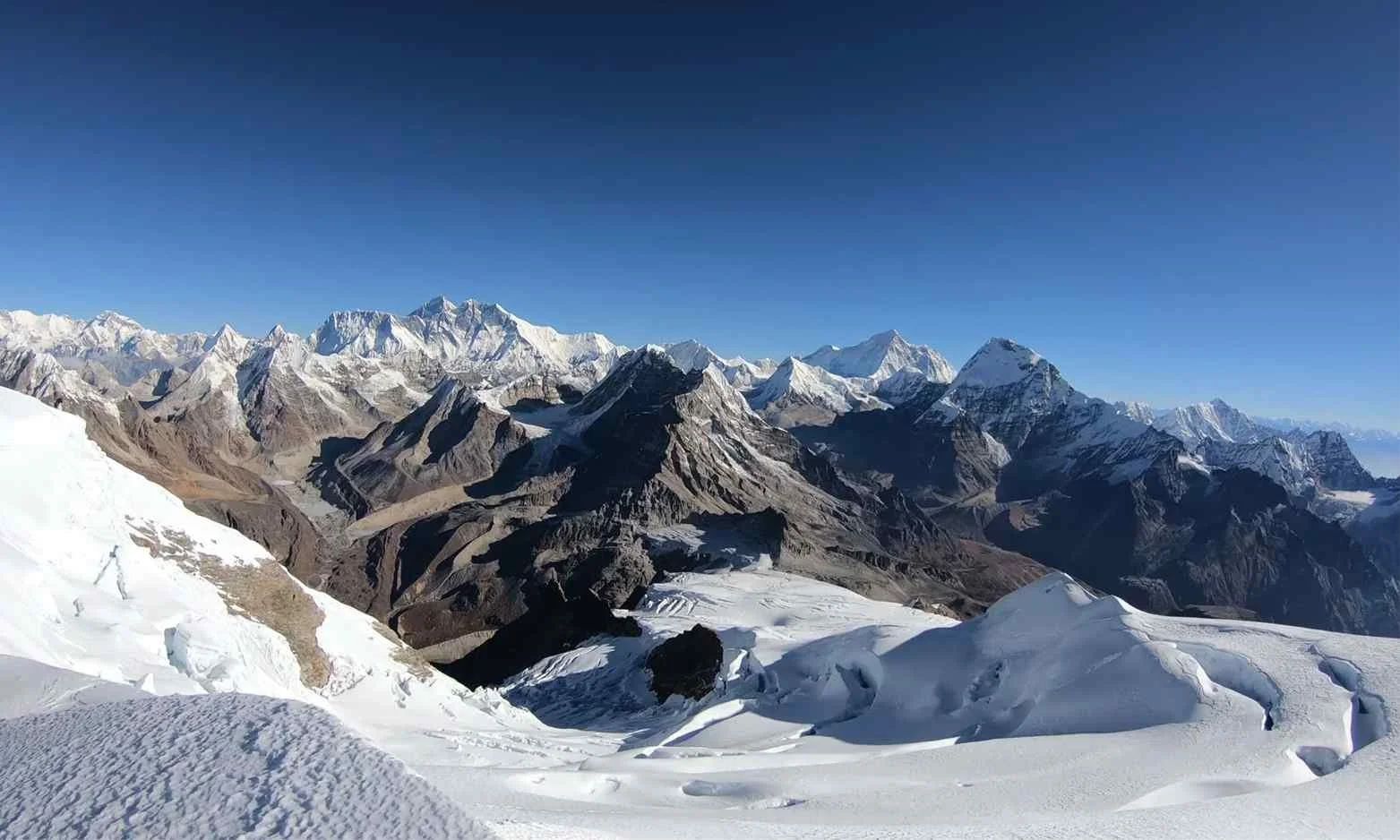
Trekking to Mera Peak in Nepal offers an exhilarating adventure to the country's highest trekking peak. The height of Mera Peak is 6,476 meters (21,247 ft), towering above the surrounding landscape.
While renowned for its accessibility, the journey to its summit is far from a simple hike. Our carefully crafted itinerary begins in Khari Khola, allowing for optimal acclimatisation. The trail winds through pristine landscapes, from rhododendron forests to rocky valleys and glacial lakes, offering a less-trodden alternative to the popular Everest routes.
We've incorporated an acclimatisation day in Thangnak, where you'll prepare for the climb with your experienced guide. The ascent follows the standard route via Mera La and High Camp. You'll be roped up from High Camp to navigate crevasses before tackling the final steep 50-meter climb to the Mera Peak summit.
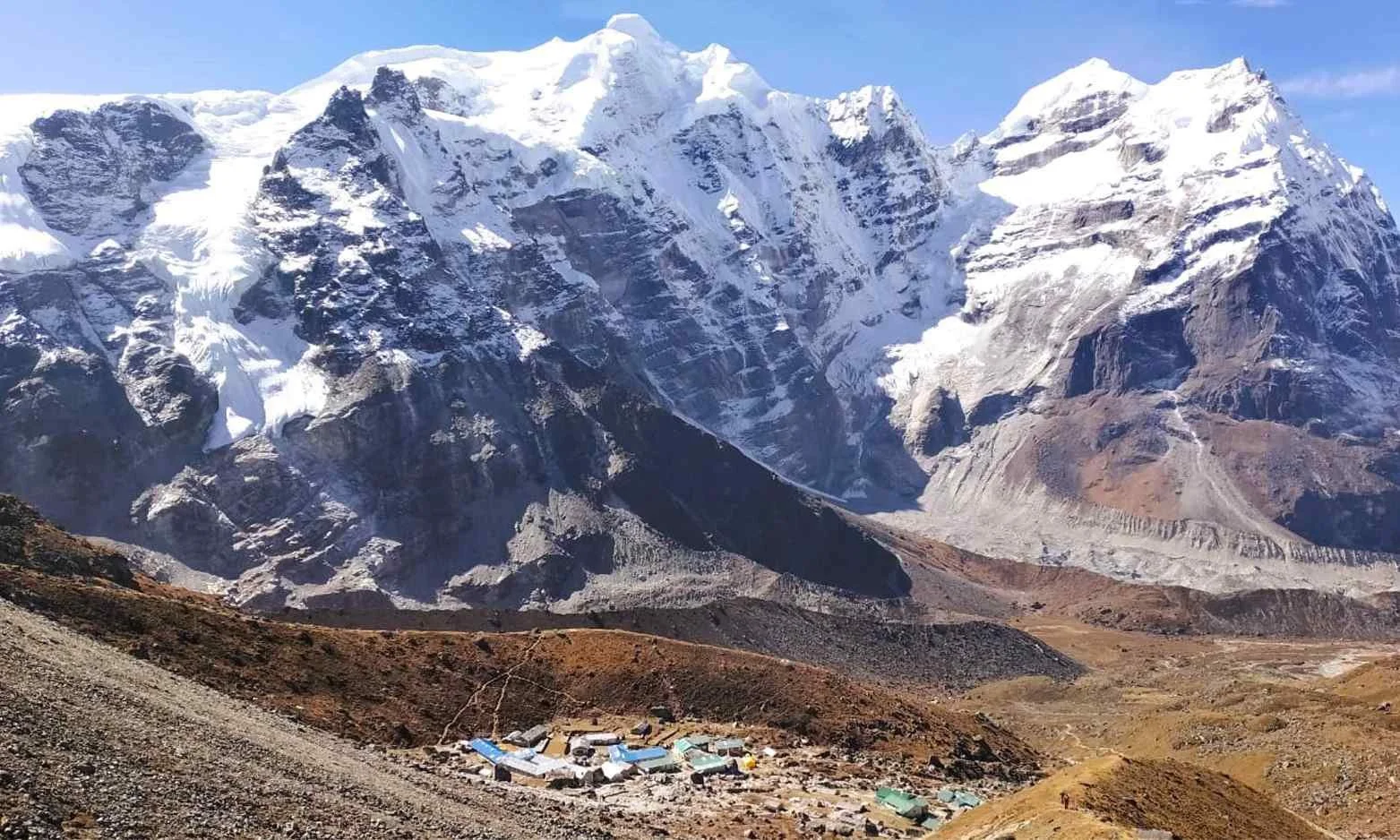
Your efforts are rewarded with breathtaking views of iconic Himalayan peaks, including Everest, Lhotse, Cho Oyu, Makalu, and Kanchenjunga.
This journey challenges you physically and connects you with Nepal's hidden natural wonders and local communities, offering an authentic and immersive mountaineering experience.
Our itinerary to the summit of Mera Peak
Your Mera Peak adventure begins with a thorough gear check in Kathmandu. From there, you'll drive to Khari Khola, the trek's starting point. Over the next few days, you'll cross Pangkongma La pass into the secluded Hinku Valley, trekking through lush rhododendron and pine forests. As the terrain gradually becomes more challenging, you'll reach Thangnak for an essential acclimatisation day. Continuing to Khare, you'll have another day to adjust to the altitude and test your climbing gear.
The journey then leads to high camp, from where you'll depart at midnight for the Mera Peak summit. At midnight, equipped with crampons and secured to fixed ropes, you'll navigate snow and ice, tackling the final steep ascent. The panorama from the peak is breathtaking, showcasing Everest, Lhotse, Makalu, and Kanchenjunga. After savouring the views, you'll descend to Khare to celebrate your achievement.
The return journey takes a different path. As you approach Zatr La pass, Mera Peak offers a final, majestic view. Crossing the pass rewards you with more panoramic vistas. The descent to Lukla is challenging, with a 2000-meter drop in elevation.
The trek concludes with a flight from Lukla to Ramechap, followed by a drive to Kathmandu, marking the end of this immersive Himalayan experience.
Day by day itinerary to Mera Peak Summit:
-
Your journey begins as you land at Kathmandu International Airport. Our team will welcome you upon arrival. We'll then escort you through the vibrant streets of Kathmandu to your hotel in Thamel.
-
Today, we focus on final preparations. We meticulously prepare your equipment for the climb ahead. Simultaneously, we obtain the required permits.
-
Departing Kathmandu, we embark on a scenic drive to Khari Khola. The road winds through scenic terrain for several hours. Finally, we turn into the hills, approaching the starting point of our adventure.
-
Our trail follows an alternative route, offering a tranquil hiking experience. We encounter local farmers along the way, providing glimpses into rural Nepali life. Our destination is Pangkongma monastery, a secluded sanctuary.
-
A brief one-hour ascent leads to Pangkongma Pass. Here, the south face of Mera Peak unfolds before you. After the pass, we enter the beautiful Hinku Valley. Our descent traverses local farmlands, offering glimpses into rural life. The trail then winds through dense forest, ultimately bringing us to Ning So Kharka.
-
We climb to 3,350 meters, our highest point today. A steep descent follows, leading us back to the river. Post-lunch, we navigate through forest trails, some quite challenging. The day concludes with a river crossing via a wooden bridge, bringing us to our teahouse.
-
The morning's journey takes us through undulating jungle paths. We enter Makalu Barun National Park post-lunch. Sub-alpine forests dominate for hours until we reach Inku Khola River. Here, the scenery transforms abruptly. Khote awaits, nestled among boulders and surrounded by imposing rocky peaks.
-
Our day starts alongside a glacial river, nourished by surrounding peaks. The forest recedes, unveiling an open valley flanked by mountains. Past Gondishung, we encounter a 200-year-old gompa beneath a massive boulder. The valley then turns east, revealing new peaks. As we near Thangnak, the Mera glacier route emerges.
-
This day is dedicated to acclimatisation, a vital process at high altitudes. We balance rest with exploration. A trek up Thangnak's slopes rewards us with stunning Mera La Pass views. In the afternoon, we venture north to witness the transformation of Sabai Tsho, an ancient glacial lake.
-
Trekking alongside Dig glacier in the morning offers a gentle, unhurried experience. As you progress, the valley unfolds, revealing spectacular northern vistas of another massive glacier and distant peaks. The journey maintains an easy pace for the most part. However, the final ascent to Khare village presents a steeper challenge, requiring a bit more effort from trekkers.
-
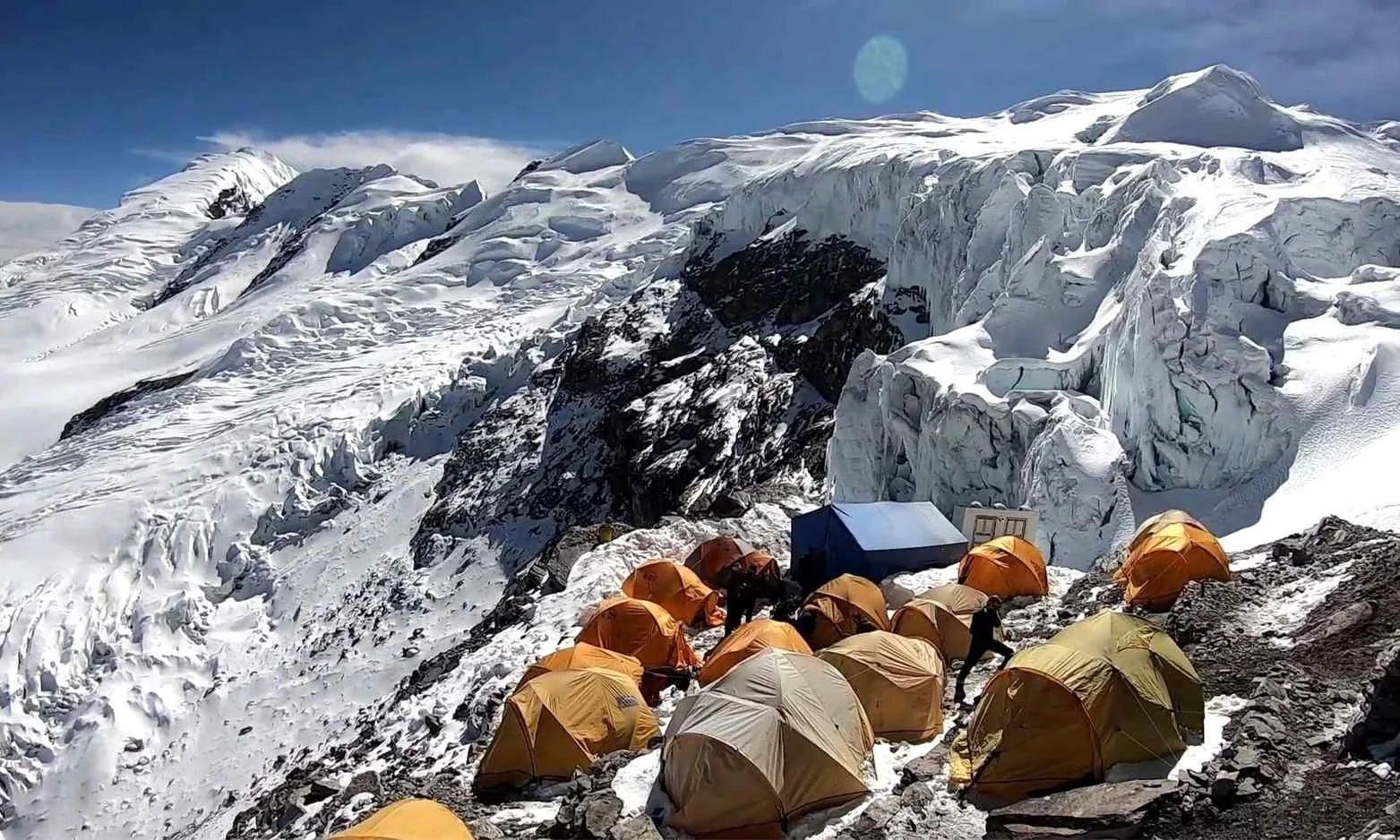
Our path leads us to Mera High Camp today. We encounter a steep but short climb to Khare's western ridge. We then proceed upwards, traversing varied terrain until we arrive at the tented camp.
While an extra day for acclimatisation is an option, it would utilise the contingency day scheduled for day 13. -
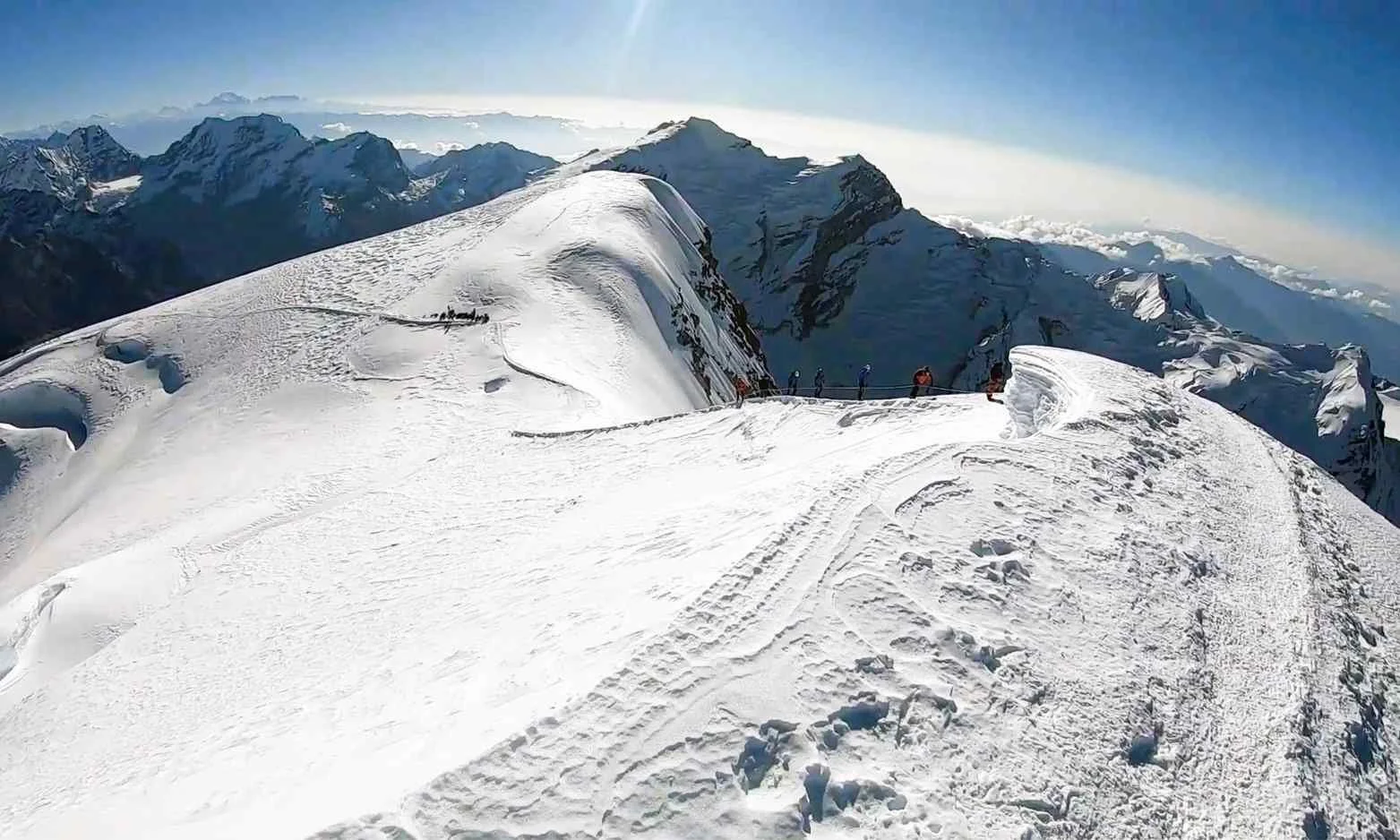
Midnight marks the start of the ascent to Mera Peak. We put on our climbing gear and ascend the main glacier, crossing to the south as we near the summit dome. Most of the ascent involves manageable snow slopes until we reach the summit's base. The final steep stretch, however, requires our climbing Sherpa to set a fixed rope for safety.
Clear weather rewards us with a 360-degree panorama from the summit. Five 8000-meter peaks, including Everest and Makalu, dominate the horizon. Smaller yet equally impressive mountains like Baruntse and Ama Dablam complete this awe-inspiring view.
After savouring the view, we make our way back to high camp for a quick meal, then continue our descent to Khare.
-
We've built in a spare day for your safety and comfort. Unpredictable mountain weather may affect our summit plans. This extra time also helps us manage any delays encountered while approaching the peak, ensuring a smoother, more rewarding expedition.
-
Descending through the lovely Hinku Valley, we make our way back to Khote. The day's trek is predominantly downhill.
-
Your journey begins with a hike to a local settlement. The trail then ascends sharply along a ridge, taking you through dense forest and above the treeline. After crossing a small pass, you'll descend to Thuli Kharka. Our teahouse here offers stunning views of the surrounding peaks.
-
Zatr La Pass, at 4660m, marks our final climb of 400 meters. Here, we bid farewell to the Hinku wilderness and our conquered peak. The journey concludes with a steep 2000-meter descent. Lukla's welcoming lodges await, marking the end of our immersive trek.
-
Fly to Ramechhap, then travel by road to Kathmandu. Upon arrival, a comfortable hotel room and a rejuvenating hot shower await.
-
Delve into Kathmandu's authentic culture. Visit a cultural site or wander the streets for authentic experiences. Shop for authentic Nepali crafts in Kathmandu's local markets.
-
Your climbing journey ends with a warm goodbye and a comfortable transfer from your hotel to Kathmandu International Airport.
Mera Peak Trek Map
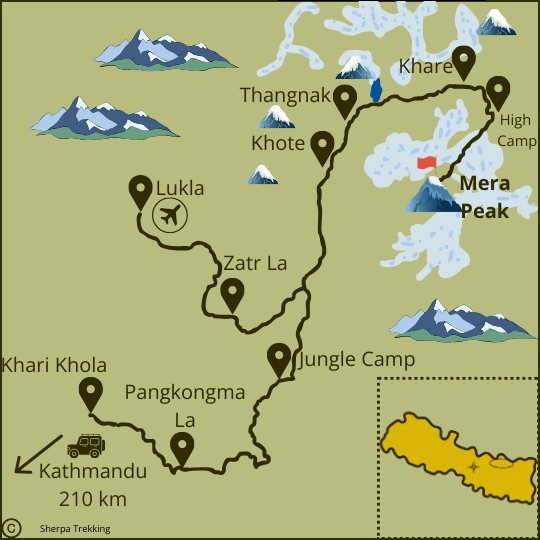
Our Mera Peak trek map provides a comprehensive overview of your journey to Nepal's highest trekking peak. It outlines key stages of your adventure, from lush forests to challenging mountain passes like Pangkongma La and Zatr La. The map marks the Hinku Valley, Mera Peak High Camp, and the summit, offering a visual guide for your ascent.
For those seeking more detail, topographical maps are available for purchase in Kathmandu before your trek begins. This additional resource will enhance your understanding of the terrain and help you prepare for the challenging expedition ahead.
How Difficult is Mera Peak
Mera Peak is not difficult, but it's a trek that requires respect and preparation. Standing at 6,476 meters (21,247 ft), it's often described as an easy trekking peak in Nepal. However, this characterisation can be misleading.
A beginner can climb Mera Peak, yet it requires physical fitness and mental fortitude. The mountain lacks technical challenges, making it accessible to those without extensive mountaineering expertise. However, high-altitude experience and basic climbing skills significantly boost summit success. Mera Peak offers an authentic Himalayan adventure, blending physical challenge with breathtaking landscapes.
The journey begins with a standard trek to Khare base camp. From there, you ascend to Mera High Camp, a tented site at considerable altitude.
Summit day begins at midnight, with temperatures potentially plummeting to -25°C (-13°F). Winds can be fierce, and snow is common. The ascent is gradual at first, but the last 50 meters are steep. Our experienced Sherpas secure this section with fixed ropes.
When is the best time to climb Mera Peak
The best time to climb Mera Peak is are during spring and autumn. Pre-monsoon, from late March to early June, offers stable weather and clear views. Post-monsoon, spanning September to November, boasts moderate temperatures and vibrant landscapes. These periods provide ideal climbing conditions. However, high-altitude weather is unpredictable. Remain flexible and prepared for sudden changes.
The monsoon season poses significant challenges for Mera Peak climbers. Heavy rainfall and persistent cloud cover severely limit visibility. Trails become treacherous and slippery.
Winter brings its own set of hazards. Gruelling, frigid conditions dominate, with temperatures plummeting below zero. Heavy snowfall is common. These factors, combined with increased avalanche risk, make winter ascents extremely dangerous. Local guides strongly advise against attempting Mera Peak during these seasons.
What's included and What's not included in the Mera Peak trek
The cost of the Mera Peak expedition is dynamic and reflective of trekking seasons, group sizes, and additional logistics. A starting price is provided, with fluctuations expected based on the specific demands of the trekking period.
To ensure that you are well-prepared for the costs, we provide a detailed list of what’s included and excluded in the Mera Peak climb experience.
-
Airport Pickup & Drop off:
Immediate transfer from Kathmandu airport to your hotel, marking the start of your adventure. After your trek, we organise your transport back to the airport.
Kathmandu-Mera Peak trek transportation:
Your Mera Peak journey begins with a private jeep to Khari Khola. After conquering the peak, fly from Lukla to Ramechap. We then drive you to your Kathmandu hotel.
Kathmandu Accommodation:
Your stay includes two nights in a Thamel area hotel before the trek and two nights after, with breakfast provided.
Teahouse Lodging:
Thirteen nights in local teahouses during the trek, immersing you in authentic Nepali hospitality.
Camping during the climb:
At Mera Peak high camp, immerse yourself in alpine camping. We ensure your comfort with arranged dome tents, mattresses, and sleeping bags.
Trek Meals:
Full board (breakfast, lunch, and dinner) throughout the trek. During the climb from Khare we include a variety of drinks with water and hot beverages.
Professional Climbing Guide:
A licensed mountain guide accompanies you for the entire trek. For the challenging ascent from Khare to Mera Peak's summit, an experienced climbing Sherpa joins our team. Their expertise ensures your safety and enriches your adventure.
Porter Service:
One porter for every two trekkers, carrying up to 12 kg per person.
Staff Support:
Comprehensive care for our guide and porter team, ensuring their well-being throughout the journey.
Trekking Gear:
Complimentary use of a waterproof luggage bag for the duration of your trek.
Climbing Gear:
Climb with confidence. Our package includes vital climbing gear: ropes, helmets, ice axes, harnesses, and jumars. This equipment, essential for your safety, allows you to focus on the breathtaking Nepali landscape.Please note: Insulated mountain boots (category D/E) and gaiters are not included.
Permits and Fees for Mera Peak:
Entry fees for the region with the Everest TREK card, Makalu Barun National Park entrance permit and the Mera Peak climbing permit and all applicable local taxes.
Local Support:
Dedicated assistance from our Kathmandu office throughout your Himalayan experience. -
What's not included:
International Flights:
You are responsible for arranging your travel to Nepal.
Nepal Visa:
Must be obtained before your arrival or upon your arrival in Nepal.
Kathmandu Meals:
Lunches and dinners in Kathmandu are not covered in the package.
Personal Trek Expenses:
Costs for beverages, snacks, hot showers, internet, laundry, and battery charging in the teahouses during the trek.
Travel Insurance:
Personal travel insurance is essential and not included in the package. Ensure your insurance policy includes helicopter rescue coverage for altitudes exceeding 6000 meters.
Emergency Rescue:
Charges for any rescue operations during the climbing adventure are not covered.
Unforeseen Costs:
Additional expenses due to itinerary changes, delays, or natural events are not included.
Gratuities:
Tips for your guide and porter are at your discretion and not included in the package.
Mera Peak offers an unparalleled adventure for those seeking to push their limits. With Sherpa Trekking, you'll experience the authentic culture of Nepal while conquering this formidable summit.
The journey combines physical challenge with breathtaking Himalayan vistas. From remote villages to high-altitude camps, each step reveals Nepal's hidden treasures.
Whether you're an experienced climber or an ambitious novice, Mera Peak presents a unique opportunity. Contact us to plan your ascent and discover the hidden treasures of Nepal's mountains.
Frequently Asked Questions about Mera Peak
-
Makalu Barun National Park houses Mera Peak, a hidden gem bordering the famous Khumbu Region. The trek involves traversing the Hinku Valley. Once there, you can see Everest from Mera Peak, and numerous other snow-capped peaks, both famous and lesser-known.
-
The height of Mera Peak varies across its three summits. Mera North stands at 6,476 meters (21,247 ft), Mera Central at 6,461 meters (21,198 ft), and Mera South at 6,065 meters (19,898 ft). Known as Nepal's highest trekking peak, we focus on ascending Mera Central, the most frequently climbed summit.
-
Mera Peak requires three crucial permits. The Everest Trek permit and the Makalu Barun National Park entrance permit are needed for regional entry. Then you need the specific Mera Peak climbing permit. These ensure your legal right to explore this peak. Permit fees reflect seasonal demands. Securing the essential climbing permit varies by season: spring climbers contribute $350 each, while those tackling the peak in autumn pay $175 per person.
-
Conquering Mera Peak requires more than just physical prowess. It demands mental fortitude and comprehensive preparation. Begin your journey months in advance with a rigorous training regimen. Build stamina through consistent aerobic exercises and enhance overall strength with targeted training. This preparation not only readies your body but also strengthens your connection with Nepal's challenging terrain.
-
Our itinerary prioritises safety through careful acclimatisation. We start at a comfortable altitude, gradually ascending to Khare base camp.
One acclimatisation day is included, with an optional second day. To minimise exposure to harsh elements, we opt for a midnight summit attempt from high camp, followed by a swift return to the teahouse.
-
Communication is crucial. Inform our guide of any discomfort, even mild symptoms. Physical fitness aids your journey, but acclimatisation is essential at high altitudes. Altitude sickness can strike anyone, regardless of preparation.
Stay hydrated and avoid alcohol. Cease ascent if symptoms appear. Acetazolamide may accelerate acclimatisation. Should symptoms intensify or linger, descending promptly is the only solution.
-
Adequate insurance is crucial for your expedition. It should cover high-altitude climbing and emergency helicopter evacuation. The Everest region offers reliable rescue services. Experienced doctors at the Lukla hospital specialise in altitude sickness treatment.
-
We recommend bringing your own mountaineering boots, preferably double boots for optimal insulation. All other climbing equipment is included in our package.
For camping, we provide a dome tent, a light mattress, and a warm sleeping bag. If you prefer extra comfort, consider bringing your own warmer mattress.
Sleeping bags are provided only at Mera Peak High Camp.
We offer warm down jackets and sleeping bags for rent. These are ideal for teahouse stays and equally suitable for your expedition.
-
Most trek nights are spent in local teahouses, which offer basic rooms and dining options. These mountain huts provide simple, unheated bedrooms with shared bathrooms, though some offer private bathroom facilities. The dining room is usually heated after sunset.
Dome tents at high camp provide shelter for the overnight stay. A kitchen tent serves as a hub for meals and refreshments.
-
Phone connectivity varies during the trek. While often available, it's not constant. Some teahouses offer Wi-Fi for a fee when electricity is available.
-
Explore our commitment to responsible travel in Nepal here.
A garbage deposit fee is part of our responsible tourism practices. It's refunded when we leave the mountain clean. We don't remind you about this. We're confident in your commitment to leave no trace. Our focus is on immersive experiences and genuine connections