
Explore the Kanchenjunga Trek in Nepal
Kanchenjunga Trek: An overview of the adventure
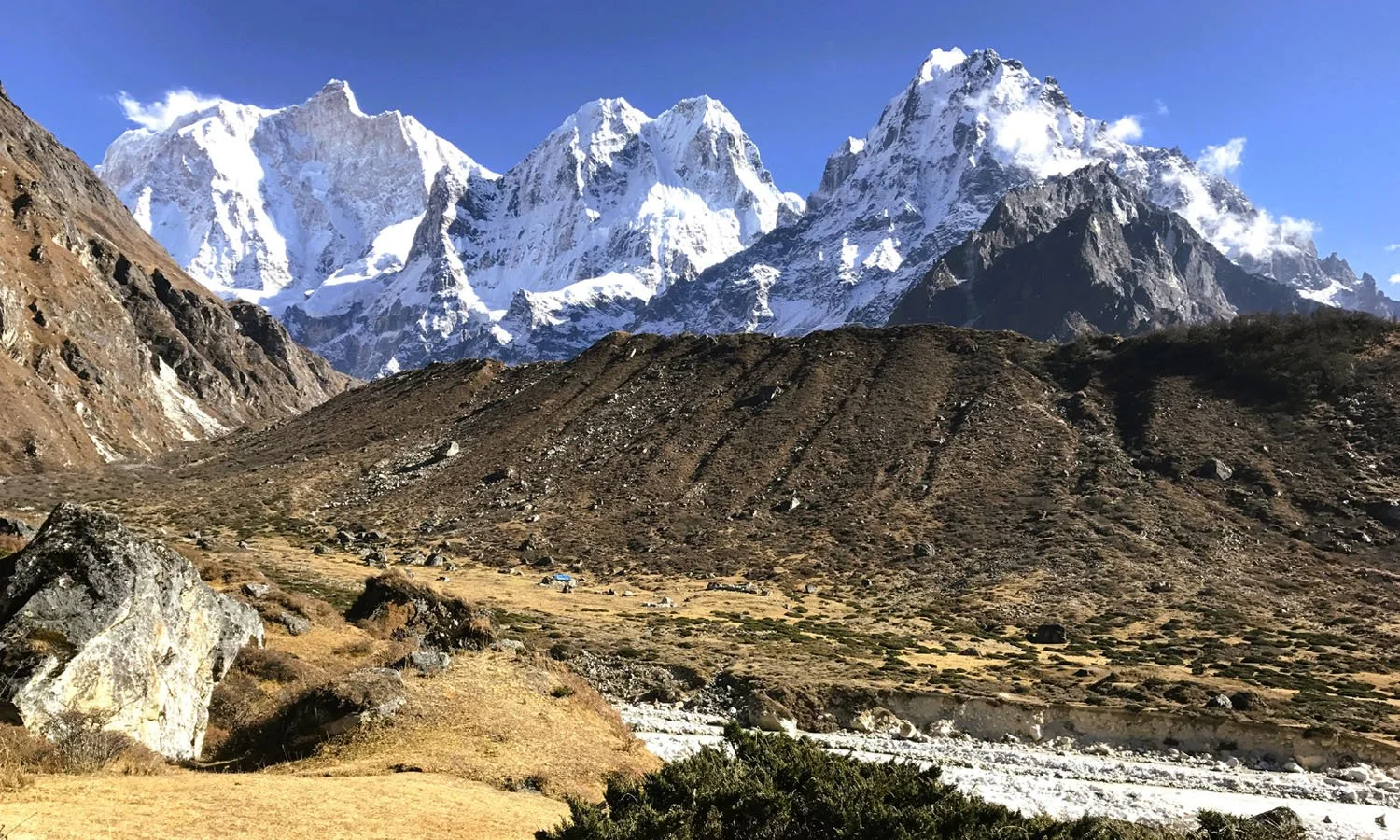
The Kanchenjunga trek offers an authentic Nepal adventure in a remote, less-traveled region. As the Tibetan mountain name suggests, this journey takes you to Kanchenjunga Base Camp, where "five treasures of snow" await. Situated in eastern Nepal, bordering Sikkim and Tibet, the region promises spectacular mountain vistas.
The Kanchenjunga Circuit leads you through diverse landscapes. You'll traverse subtropical valleys, vibrant rhododendron forests, and serene high alpine meadows. The trail provides breathtaking views of the Jannu and the entire eastern Nepal mountain range. Both south and north base camps are part of this challenging expedition.
This trek is not for the faint-hearted. It's a long, demanding journey through an area with minimal infrastructure. Narrow, rugged trails test your endurance. However, the rewards are immeasurable. The Kanchenjunga Mountain peak, towering at 8,586 meters, offers awe-inspiring views.
Beyond the natural beauty, this trek provides unique cultural experiences. You'll encounter authentic villages and have genuine interactions with local communities. These personal connections offer insights into the rich Nepali culture and traditions preserved in this secluded region.
For those seeking an off-the-beaten-path adventure, the Kanchenjunga trek delivers an unforgettable experience. It combines stunning Himalayan scenery with meaningful cultural encounters, embodying the true essence of trekking in Nepal.
Our Kanchenjunga Circuit Trek itinerary
The Kanchenjunga trek is a journey of immense reward, despite the long travel to its starting point. As you embark on this adventure, the first days will lead you through rural Nepal's terraced fields and local settlements. Soon, teahouses offer glimpses of the majestic Kanchenjunga Mountain peaks, hinting at the grandeur to come.
As you ascend, the landscape transforms. Alpine trees, brushes, and yak pastures replace the lowland scenery. At Octang, you're greeted with an inspirational mountain view, a mere prelude to the trek's crescendo.
The Kanchenjunga Circuit challenges you with several passes as you move from the southern to the northern side of the mountain. At Selele, basic teahouses offer a rare opportunity to rest at a high altitude, surrounded by breathtaking vistas. Both South and North Kanchenjunga Base Camp are visited during the trek.
Ghunsa, a remote Sherpa village, offers a genuine glimpse into the life hidden deep in the Himalayas. A highlight is lunch at North Kanchenjunga Base Camp, where snow-capped peaks encircle you in a 360-degree spectacle.
Descending, you return to Taplejung and civilisation. The journey concludes with a drive through Nepal's tea garden hills and a flight from Bhadrapur to Kathmandu. Here, cultural sites and markets await, offering a fitting end to your Himalayan adventure.
Kanchenjunga Trek itinerary: A day by day guide
-
Your journey begins as you land at Kathmandu International Airport. Our team will welcome you upon arrival. We'll then escort you through the vibrant streets of Kathmandu to your hotel in Thamel.
-
Use this time wisely for last trek preparations. Ensure all your equipment is ready. Meanwhile, our team will complete the permit process, ensuring a smooth start to your adventure.
-
A local flight transports us to eastern Nepal's Terai plains, where the climate is notably warm. From there, we drive into the foothills, witnessing the landscape transform. Our journey ends in the tea gardens, where cooler temperatures prevail.
-
We will follow the main road before turning onto a gravel road leading to Kebang. Upon arrival at the teahouse, you can explore the surrounding area. This short walk offers a chance to stretch your legs and immerse yourself in the local environment.
-
Our trek begins with a brief ascent over a mountain saddle. We then follow the terrain's natural contours before descending to cross a river. The final leg is a 400-meter climb to Yamputhin's teahouse.
-
Our journey to Torongtang now follows a new, safe route due to a landslide on the main trail. We will trek alongside a river before crossing a suspension bridge. The final leg is an 800-meter ascent to our teahouse, offering unique views of Nepal's ever-changing landscape.
-
Prepare for an intensive morning of trekking. Our route traverses a mountain ridge between valleys, taking approximately 2 hours. The pass offers stunning views of Jannu before we descend to Torongtang via rocky paths and lush forest.
-
We hike through pine and rhododendron forests today. The trail climbs steeply along the valley floor. As elevation increases, trees thin out, offering glimpses of snow-capped peaks and the Yalung Glacier.
-
Take time to recharge today. Consider a brief acclimatisation hike to adjust to the altitude.
-
From Tseram, climb through forests to a stone-filled gully. The path eases after half an hour, leading to yak pastures. Enjoy views of towering peaks. Ramze (4580m) rests near the Yalung Glacier, the highest lodge in southwest Kangchenjunga.
-
Our path leads to Octang, offering prime Kanchenjunga views. One hour from Ramche, we reach Octang, offering prime mountain views. Here, Kanchenjunga's south side unfolds, showcasing four summits. We will head back to Tseram afterwards.
-
Prepare for a challenging day featuring three high-altitude passes. Starting with a climb to two small lakes, we'll navigate Sinelapcha La (4730m), Mirgin La (4690m), and Sinion La (4670m). This challenging route rewards us with breathtaking vistas before we descend to our teahouse in Selele.
-
After yesterday's challenge, we start later today. We'll first trek along hillsides with beautiful mountain views and then descend through rhododendron forests to Ghunsa village. Afternoon options include visiting the monastery, browsing local shops, or exploring the village.
-
Leaving Ghunsa, we trek through diverse forests and encounter mani walls and chortens. After lunch, we climb steeply and then descend to Khambachen's teahouse. Here, we're treated to views of majestic Jannu (7110m).
-
Our journey today balances moderate difficulty with unveils the Himalayas' grandeur step by step. After crossing a landslide area and descending to the river, we'll reach the teahouses at Lhonak, which overlook the vast Kangchenjunga Glacier.
-
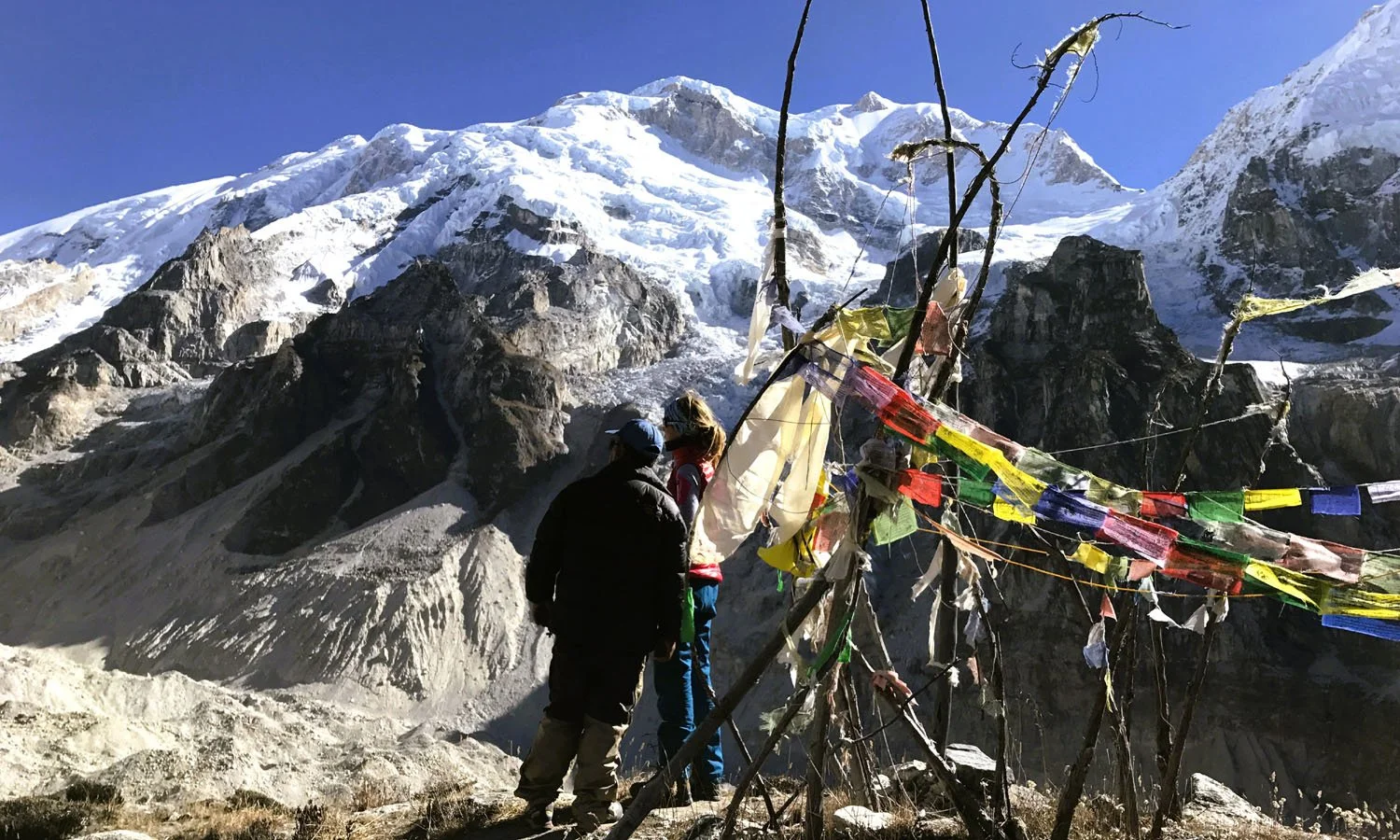
Our path from Lhonak follows Kanchenjunga Glacier's edge. We traverse rocky terrain to Pang Pema's grassy plateau. Here, we'll have lunch while admiring Kanchenjunga's imposing north face before descending back to Lhonak.
-
We retrace our steps to Ghunsa today. This descent allows us to revisit breathtaking vistas.
-
We descend a steep trail alongside the rushing river. The path undulates as we approach Gyabla (2725m). From there, a short forest trek through diverse vegetation leads to Amjilosa.
-
A final, brisk hike brings us to Serkathum for lunch, marking the conclusion of our Kanchenjunga trek. Afterward, we will switch to jeep transport and head to the town of Taplejung.
-
We drive through picturesque terraced hills today. Our destination is a hotel near Kanyan, nestled among tea gardens. This journey showcases Nepal's diverse agricultural landscape.
-
Departing our hotel, we transition from hills to the flat Terai plains. In Bhadrapur, we catch a local flight to Kathmandu.
-
Delve into Kathmandu's authentic culture. Visit a cultural site or wander the streets for authentic experiences. Shop for authentic Nepali crafts in Kathmandu's local markets. This day also serves as a buffer for potential flight delays.
-
Your Nepal journey ends with a warm goodbye and a comfortable transfer from your hotel to Kathmandu International Airport.
The Kanchenjunga Base Camp trek map
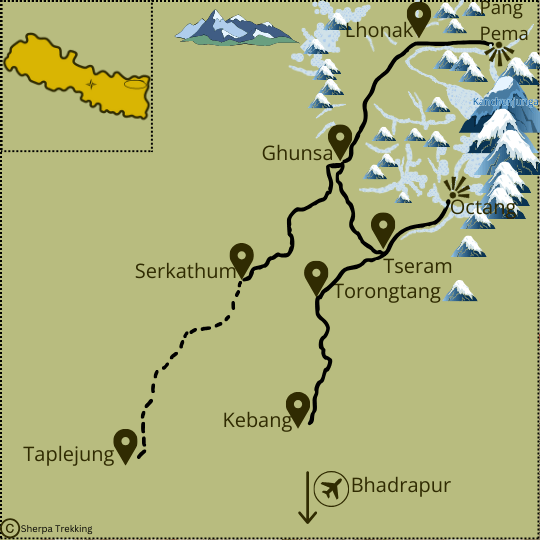
Our Kanchenjunga map provides a snapshot of this challenging journey. It showcases both base camps and the passes between south and north, giving you a clear altitude perspective.
While this overview helps visualise the route and elevation changes, we strongly recommend purchasing a detailed topographical map in Kathmandu. This ensures you have the most current information for your off-the-beaten-path adventure. It allows you to fully immerse yourself in the hidden wonders of Nepal's Kanchenjunga region.
Altitude and acclimatisation during the Kanchenjunga Trek
Altitude is a key factor in the Kanchenjunga trek. As you ascend from lush valleys to stark alpine landscapes, you'll experience Nepal's diverse ecosystems firsthand.
Your journey begins at lower elevations and steadily climbs. Trekkers reach Octang at 4740m, offering prime Kanchenjunga views. The route includes three passes over 4600m: Sinelapche La, Mirgin La, and Sinion La. Pang Pema is the highest point of the trek. It's the site of Kanchenjunga Base Camp, with a height of 5,190 meters. Here, trekkers can observe the mountain's imposing north face up close.
The trek demands proper acclimatisation and physical preparation. This altitude journey offers a genuine taste of Himalayan trekking, testing endurance while providing unforgettable mountain vistas.
Best time to trek to Kanchenjunga Base Camp: Seasonal guide
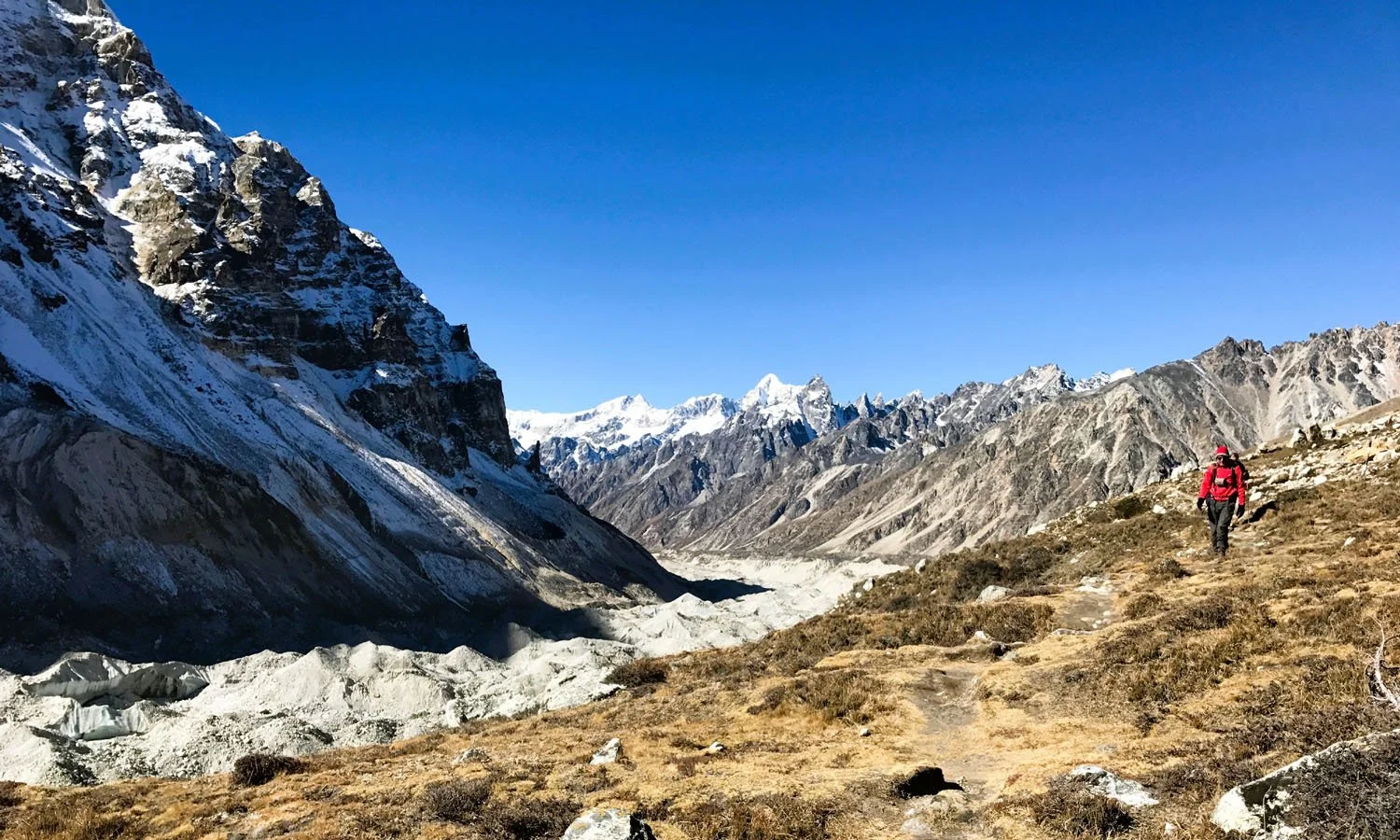
Autumn, spanning from September to November, is the best time for the Kanchenjunga trek. This season brings stable weather conditions and excellent visibility, perfect for capturing breathtaking views of the Himalayan range.
Spring, from March to May, offers clear skies and moderate temperatures. The landscape comes alive with blooming rhododendrons, providing a vibrant backdrop to your journey.
Avoiding the trek during monsoon season (June to August) and winter (December to February) is advisable due to heavy rainfall and extreme cold, respectively. These conditions can make the trail treacherous and significantly impact your experience.
Kanchenjunga trek cost: What's Included and What's Not Included
The cost of the circuit trek is dynamic and reflective of trekking seasons, group sizes, and additional logistics. A starting price is provided, with fluctuations expected based on the specific demands of the trekking period.
-
Airport Pickup: Immediate transfer from Kathmandu airport to your hotel, marking the start of your adventure.
Kathmandu-Kanchenjunga trek Transportation: Drive for Kathmandu-Ilam-Taplejung route, drive for Serkathum-Bhadrapur route, and flight return to Kathmandu.
Kathmandu Accommodations: Four nights in a Kathmandu hotel in Thamel with breakfast included, two before and two after your trip.
Teahouse Lodging: Stay in traditional teahouse rooms while on the Kanchenjunga trek, experiencing the local hospitality
Meals on Trek: Full board (breakfast, lunch, and dinner) is provided to energise you through the Himalaya.
Professional Guide: Expert guidance from a certified, English-speaking guide throughout your trek.
Porter Service: Assistance with luggage up to 10 kg per trekker by porters, who are well cared for.
Trekking Permits: All necessary permits for the Kanchenjunga Conservation Area, Kanchenjunga Restricted Area Permit, TIMS card, and local taxes are arranged.
Local Support: Our Sherpa Trekking team in Kathmandu offers ongoing support for your trek.
-
International Flight to Kathmandu: You are responsible for arranging your travel to Nepal.
Nepal Entrance Visa: Must be obtained before your arrival or upon your arrival in Nepal
Meals in Kathmandu: Lunches and dinners in Kathmandu are not covered, offering you the flexibility to explore local cuisine.
Personal Expenses During Trek: During your trek, expenses for beverages, hot showers, internet services, laundry, and battery charging are not included.
Personal Travel Insurance: This is essential for your safety and not included in the trek package.
Rescue Operation Expenses: Costs related to any emergency rescue during the Kanchenjunga trek are not covered.
Unforeseen Costs: Any additional expenses arising from itinerary changes due to delays or natural calamities are not included.
Gratuities: Tips for your mountain guide and porter are not included but are appreciated.
The Kanchenjunga trek stands as a testament to Nepal's raw beauty. It offers a perfect blend of natural wonders and cultural immersion. Trekkers traverse diverse terrains, from lush forests to icy glaciers. Local interactions provide insight into traditional Himalayan life. Sherpa Trekking guides enhance this experience with their expertise and local knowledge.
This trek demands determination but rewards with unparalleled views. It's a journey of personal growth and discovery. The Kanchenjunga region's remoteness preserves its authentic charm. For those seeking a genuine Himalayan adventure, this trek delivers in full measure. It's an experience that truly embodies the spirit of exploration.
